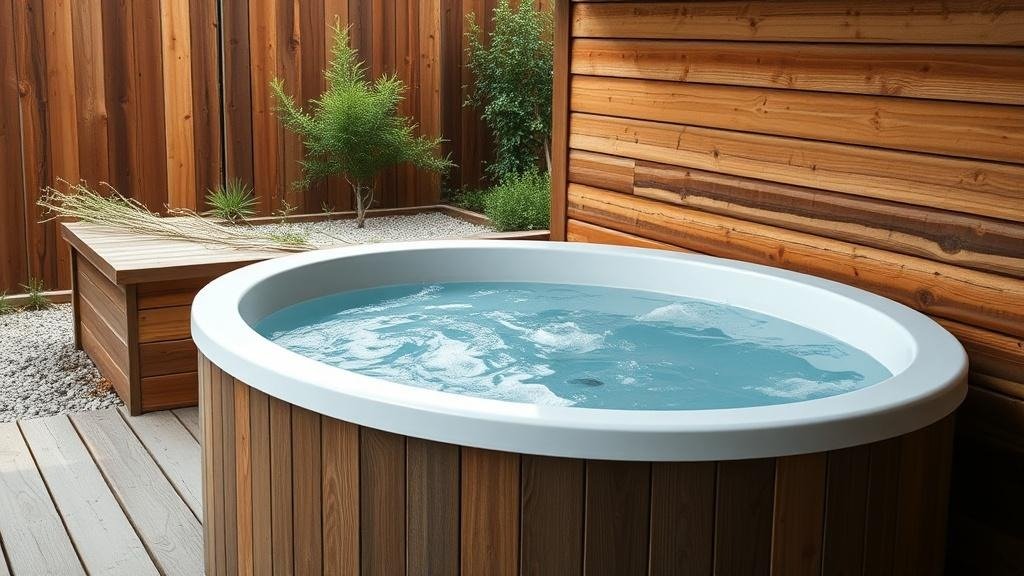
Outdoor Sauna 101: What Homeowners Should Know Before Buying is worth evaluating through the homeowner’s real week, not a perfect catalog photo. The best setup is the one that gets used, stays safe, and does not become a maintenance headache.
Last October, my neighbor Paul spent a Saturday afternoon showing me the barrel sauna he’d just finished installing on a gravel pad behind his detached garage in suburban Minnesota. The unit looked great. The problem was the electrical run. He’d wired the 240V circuit himself, tapped off a sub-panel in the garage with undersized wire, and skipped the permit. His home inspector friend took one look and told him to rip it out before something caught fire. Paul ended up paying an electrician $1,400 to do what would have cost $800 if he’d just called one from the start. That story captures about 80% of the mistakes I see homeowners make with outdoor saunas: they obsess over the unit and underestimate everything around it.
The boring truth is that an outdoor sauna project is half product selection and half site preparation. Get both right, and you end up with something you actually use four times a week. Get one wrong, and a $6,000 kit becomes an expensive garden ornament. Most home builds land between $2,490 and $16,980 depending on size, wood species, and heater class, but the all-in number (pad, wiring, permits, accessories) is what actually matters.
Reading a Spec Sheet Without Getting Lost
This is where most buyers’ eyes glaze over, and where the bad purchases happen.
Outdoor saunas fall into two main form factors: barrel units and cabin units. Barrels are compact (think 6×6 feet), heat up faster, and sit on smaller footprints. Cabins run 6×8 to 8×10, hold more people, and generally offer better insulation, typically R-12 in the walls for anything worth buying.
Heater sizing is the single most consequential spec. Traditional sauna heaters range from 4.5 to 9 kW. The match has to correspond to cabin volume. An undersized heater runs continuously, burns out components early, and never quite hits temperature on a January evening in Michigan. An oversized heater cycles too aggressively and wastes electricity. Every reputable manufacturer publishes a sizing chart. Use it instead of trusting a forum post from 2019.
Wood matters more than most buyers realize. You want certified-tight tongue-and-groove cladding in cedar, hemlock, thermo-aspen, or redwood. Budget units sometimes substitute butt joints backed with felt. Those builds bleed heat at the seams and look weathered within two seasons. If you’re spending $3,000-plus on a sauna, demand tongue-and-groove joinery. It’s not a luxury feature; it’s the baseline.
For cold-plunge gear (since many buyers now pair a sauna with a tub), check chiller horsepower, filtration micron rating, ozone/UV sanitation, and tub material. A 1/3 HP chiller can hold 50°F in a small insulated tub in a temperate climate. That same chiller will struggle badly in an unshaded spot in Texas in August.
See also: How Technology Is Changing Modern Entertainment
The Install: Pad First, Then Wiring, Then Everything Else
Think of an outdoor sauna install like building a small shed that happens to draw serious electrical current. The carpentry side of a pre-cut kit is genuinely manageable for two adults with a weekend and basic tools. The electrical side is not.
Pad work comes first. A 4-inch compacted gravel pad with proper drainage works fine for barrel units on flat, stable ground. Cabin saunas, especially in freeze-thaw climates or on soft soil, belong on a 4-inch reinforced concrete slab (roughly $4 to $7 per square foot installed). A pad that settles or cracks once the unit is sitting on it is exponentially more expensive to fix than one poured correctly the first time.
Electrical comes second. A typical traditional sauna heater pulls 4.5 to 9 kW on a dedicated 240V circuit at 30 to 50 amps. This is licensed-electrician territory. Full stop. The electrician runs the circuit, sizes the breaker correctly, pulls the permit, and ties into your main panel. Skipping this step is how you end up like Paul, or worse.
Ventilation is the detail people forget. An outdoor sauna needs a fresh-air intake positioned below the heater and an adjustable exhaust vent on the opposite wall near the ceiling. Without proper airflow, you get stale air, uneven heat, and a room that smells like the inside of a gym bag by month three.
Permitting varies wildly. Some counties exempt detached structures under 200 square feet from building permits. Almost none exempt the 240V electrical work. Call your local building department before you buy the kit. A five-minute phone call can save you a compliance headache later.
What the Research Actually Says (and Doesn’t)
The landmark sauna study is the Laukkanen 2015 cohort published in JAMA Internal Medicine. Researchers followed 2,315 middle-aged Finnish men over 20 years and found a dose-response relationship between sauna frequency and reduced cardiovascular mortality. Men who used a sauna 4 to 7 times per week saw roughly half the cardiovascular mortality of those who used it once a week. That’s a striking finding.
A 2018 follow-up from the same research group, published in BMC Medicine, reported lower dementia incidence at the highest sauna frequencies. The likely mechanisms include heat acclimation, improved endothelial function, and a heart-rate response that mimics moderate-intensity exercise. Think of it as lying still while your cardiovascular system does a light jog.
The catch is that these were Finnish men who’d been sauna bathing their entire lives, in a culture where saunas outnumber cars. Extrapolating directly to a 48-year-old American who’s never sat in one requires some caution. Still, for healthy adults, 20-minute sessions at 170°F to 195°F, two to four times per week, is a reasonable starting protocol. Hydrate before and after. Step out if you feel lightheaded. And if you have a cardiac history, uncontrolled blood pressure, or are pregnant, talk to your doctor before your first session. Not after.
What It Actually Costs, All In
Sticker price is misleading. Budget the unit, the pad, the wiring, permits, and a small reserve for accessories and first-year maintenance.
Sauna units: $2,490 for an entry-level barrel kit. $6,000 to $10,000 for a mid-tier cabin with a quality heater. $12,000 to $16,980 for a panoramic glass-front or premium thermo-aspen build.
Site work: $400 to $900 for a gravel pad. $1,200 to $2,400 for a concrete slab. $600 to $1,800 for a 240V electrical run (varies heavily by distance from panel and local labor rates).
Cold plunge (if pairing): $4,500 to $7,500 for a residential insulated tub with integrated chiller. $9,000 to $14,000 for a commercial-grade stainless build with full filtration. Or $400 to $900 for a stock-tank DIY setup that requires manual ice (and the willingness to haul bags from the gas station like a college student icing a cooler).
On resale, appraisers won’t add dollar-for-dollar value for a sauna. But in Northeast and Pacific Northwest markets, a well-built outdoor wellness setup functions as a genuine selling feature, similar to how a finished fire pit area moved from novelty to expected in those regions over the past decade.
On the tax side: a residential sauna is rarely HSA or FSA eligible unless a clinician issues a Letter of Medical Necessity for a documented condition. Don’t assume. Talk to your tax advisor.
Outdoor vs. Indoor vs. Infrared: The Honest Comparison
An outdoor barrel sauna heats in 25 to 35 minutes and lives on a small exterior pad, keeping heat and humidity out of your house. An indoor cabin sauna heats faster but consumes living space and requires interior venting. An infrared cabin runs at lower temperatures (120°F to 150°F), plugs into a standard outlet, and produces a different physiological response than a traditional sauna. Infrared is easier to install, but if you want the full-spectrum heat experience the Finnish research was studying, traditional is what you’re looking for.
For cold plunge specifically, a purpose-built insulated tub with a 1 HP chiller holds 39°F to 45°F all day with zero manual intervention. A chest-freezer conversion is cheap but lacks real filtration and sits in a mechanical gray area that most manufacturers won’t warranty.
My honest take: the right answer is almost never the cheapest unit or the most expensive one. It’s the build that matches your climate, your available footprint, your electrical panel capacity, and the routine you’ll actually maintain three months after the novelty wears off.
For a longer reference comparing actual model lineups and price tiers side by side, see this outdoor sauna guide. It breaks down sizing, wood species, heater wattage, and install considerations in plain language, and it’s the kind of page worth bookmarking before you start requesting quotes.
FAQs
Can I install an outdoor sauna on a deck?
Some smaller barrel units can sit on reinforced decks if the framing supports the loaded weight (often 600 to 1,200 lb). Most cabin units belong on a ground-level pad. Confirm load capacity with a structural engineer or your contractor before placing any unit on existing decking.
How often does an outdoor sauna need maintenance?
Wipe down benches after each session and oil the exterior cedar or hemlock once a year. For cold plunges, replace filter cartridges every 6 to 12 weeks, run ozone or UV sanitation on schedule, and drain and refill per the manufacturer’s recommended interval.
Will my electric bill spike from an outdoor sauna?
A 6 kW sauna heater running for one hour costs roughly $0.60 to $1.20 at typical US residential rates. Three 20-minute sessions per week land near $4 to $8 per month. A 1/2 HP cold-plunge chiller in steady state pulls about 350 to 450 watts and adds $8 to $15 monthly in most climates.
Is an outdoor sauna safe during pregnancy?
Pregnant adults should not start a new sauna or cold-plunge routine without explicit clearance from their OB-GYN. Core temperature changes carry real fetal risks, particularly in early pregnancy. This is one area where you defer entirely to your physician.
How loud is an outdoor sauna?
A traditional sauna heater is silent in operation. A cold-plunge chiller runs at roughly 45 to 55 dB at one meter, comparable to a quiet conversation. Position the unit where the chiller hum won’t bother neighbors or interior bedrooms.
Disclaimer. This article is general consumer information, not medical advice. Heat and cold therapies carry real cardiovascular load. Anyone with arrhythmias, uncontrolled hypertension, Raynaud’s phenomenon, recent cardiac events, or who is pregnant should consult a physician before starting any new sauna or cold-plunge routine.
Any 240V electrical work should be completed by a licensed electrician under the appropriate local permit.
HSA and FSA reimbursement on wellness equipment is patient-specific and depends on a Letter of Medical Necessity from a clinician. Talk to your tax advisor before assuming a purchase qualifies.
