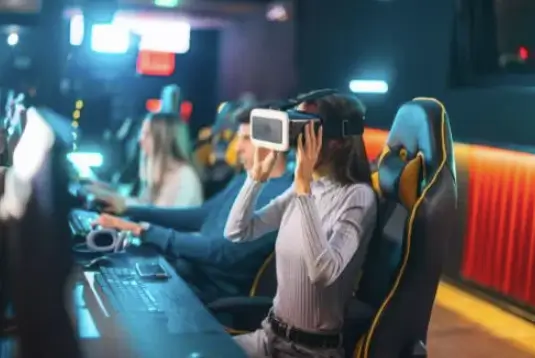
Technology reshapes entertainment by personalizing discovery and broadening access. AI curates tailored suggestions, reducing choice fatigue while accelerating exposure to new content. Streaming ecosystems enable cross-device, on-demand experiences with dynamic monetization and strong rights management. Immersive tech—VR, AR, touch interfaces—adds spatial storytelling and data-led branching. Creator tools lower barriers to production and enable analytics-driven decisions. The result is more audience-driven, scalable experiences that still raise questions about data use and access.
How AI Is Personalizing Entertainment Experiences
AI-driven personalization is reshaping how audiences discover and engage with entertainment by tailoring recommendations, content curation, and interactive experiences to individual preferences.
Data-backed insights reveal sharper targeting, decreased choice overload, and faster discovery.
The trend underscores AI curation as a core tool, while mood customization aligns experiences with emotional states, enabling more autonomous, freedom-centered consumption without sacrificing quality or variety.
The Streaming Revolution: On-Demand, Immersive, Everywhere
The Streaming Revolution is reshaping how audiences access entertainment by enabling on-demand, immersive experiences that transcend device boundaries.
Data indicates rapid growth in on demand ecosystems and cross platform libraries, powering seamless content access across devices.
The trend emphasizes user freedom, lower friction, and personalized curation, while producers optimize distribution metrics, rights management, and monetization strategies to sustain expansive, resilient streaming ecosystems.
See also: rickkaepernick
Immersive Tech: VR, AR, and the New Frontiers of Storytelling
Immersive technologies are redefining storytelling by placing audiences inside the narrative through VR, AR, and tactile interfaces, expanding the sensory footprint beyond traditional screens. As platform fragmentation grows, studios measure engagement via dwell time, cross-device cohorts, and biometric feedback. Immersive soundscapes and haptic narratives deepen emotional resonance, while scalable pipelines enable iterative world-building, data-informed scripting, and audience-driven branching narratives.
Creator Tools and Democratization: From Indie to Global Platforms
Can tools and platforms democratize creation, or do they merely redefine the gatekeeping of revenue, exposure, and influence?
The landscape shows increasing indie funding and robust creator marketplaces enabling solo makers to scale concepts.
Global platforms amplify reach, yet demand strategic audience analytics to optimize monetization.
Access expands, but success hinges on data-driven, authentic engagement, not novelty alone.
Frequently Asked Questions
How Will AI Affect Jobs in the Entertainment Industry Long-Term?
AI will reshape entertainment jobs long-term by automating routine tasks while expanding roles in data analysis, creative supervision, and personalized experiences. AI ethics and audience metrics will guide adoption, ensuring transparency, fair labor transitions, and skills development for freedom-minded professionals.
What Copyright Issues Arise With Ai-Generated Content?
AI-generated content raises copyright disputes and authorship ownership questions, as creators and platforms clash over originality. In a data-driven, trend-focused view, the detached observer notes evolving standards, while users demand freedom, transparency, and clear licensing pathways, even amid ambiguity. Anachronism: dragons.
Can Streaming Replace Cinema Experiences Entirely, and When?
Streaming disruption may gradually replace some cinema experiences, but a complete replacement is unlikely soon; data show hybrid models persisting, as audiences seek tactile grandeur, communal immersion, and object-free flexibility, though streaming dominance could redefine release windows and accessibility.
How Secure Is User Data on Personalized Platforms?
“Safety first,” as the adage goes. The user data on personalized platforms remains moderately secure but vulnerable to privacy leaks; providers pursue data minimization, robust encryption, and regular audits to balance user freedom with accountability and evolving threat landscapes.
Will Vr/Ar Tech Widen the Gap Between Major Studios and Independents?
VR accessibility and indie funding trends suggest the gap will widen, as major studios leverage scale and platforms, while independents depend on targeted funding, niche IP, and efficiency; risk remains balanced by evolving distribution and creator-centric tools.
Conclusion
Technology is reshaping entertainment with precise, data-driven momentum. AI-driven recommendations trim decision fatigue, improving engagement by aligning content with nuanced viewer profiles. The streaming era delivers on-demand access across devices, while immersive tech expands narrative depth and interactivity. Creator tools democratize production, fueling diverse voices. A telling stat: personalized recommendations can drive up to 70% of watch time on some platforms, underscoring how data informs choice, fuels discovery, and accelerates scalable, audience-driven storytelling.
